THIRD EYE Local Knowledge and Skill Activists Group.
We as a group work alternative to globalization, which suppresses the differences in the multicultural world. We value all the species as equal and believe that they have the right to live on the planet earth. To create a dialogue on these issues we, conduct workshops, seminars, informal discussion groups, in the Universities, Schools, Villages and at other social events and publish a newsletter “Moondravathu Kann”.
Sunday, September 02, 2012
Friday, June 15, 2012
Book of veteran Eezham Tamil writer published in Jaffna
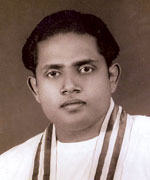
Professor Sivalingarajah garlanding Mr Nadarajan [Photo courtesy: thirdeye2005.blogspot.com]
[TamilMedia, Friday, 15 June 2012, 20:53 GMT]
A collection of writings on the antiquity and traditions of Eezham
Tamils written by Mayilangkoodaloor P. Nadarajan was launched at
I’nuvil in Jaffna on last Sunday. 76-year-old Mr. Nadarajan has spent a lifetime in
Eezham Tamil studies, editing old texts and in bringing out valuable
publications. He is regarded as a symbol of selfless service to Tamil
studies, benefitting school children to university academics.
Generations of writers, researchers and publishers were benefitted by
his editing skills in Tamil.
The present book of him is published to honour an intellectual
tradition that gives importance to society than self, said the
publishers, Parani Pathippakam, Koa’ndaavil.
The book launch event was presided by Professor of Tamil of the
University of Jaffna, S. Sivalingarajah, while Mr Kuzhanthai M.
Shanmugalingam and Mr. A. Sabaratnam received the first copies.
Mr Nadarajan has earlier brought out error-free publications of many historiographical texts.
He long served as a teacher at Mahajana College, Thellippazhai.
rtf
Posted by
ananda
at
9:56 PM
ceylon-ananda.blogspot.com/
Jeyasankar Sivagnanam is a theatre
artist and head of the Dept. Of Fine Arts at Eastern University in Batticaloa
Sri Lanka.
He has been instrumental in
re-invigorating a style of community theatre called ‘koothu’ in this war torn
region. Koothu itself is a form of theatre that involves a whole village in
producing and ‘performing’ a traditional story (e.g. The Mahabharata and the
Ramayana). The preparation takes several months and involves everyone in the
village from the young to the elders in acting, writing, dramaturgy, design and
music. For example the process allows for intergenerational exchanges where
elders may be consulted informally by younger participants on their take on the
work so far, and nieces and nephews might hear about how an uncle (or more
recently, an aunt) may have performed a part in years gone by. The work itself
becomes a topic of discussion outside the confines of any ‘formal’
organisational meeting, which in itself exemplifies the richness of investment.
The form itself is inextricably
linked to rhythmic cues that are provided by the drummers whose compositions
themselves are tied to the cadences of the words. This interdisciplinary
approach harkens to early forms of Delta Blues from the US where the singer is
free to tack on an extra line if needs be and subsequently expands the form of
the music to accommodate.
It is also worthwhile to note that
women have now been included as performers where in the past they have not.
This has allowed for a real shift in perspective as women in these communities
have borne a large part of the suffering war, tsunami and poverty has
inflicted.
Unlike western theatre where
rehearsal is outside of public view, the process is an open one. Once the story
has been decided, everyone in the village is in some way kept apprised of the
progress of the piece, so the work itself grows organically in the full
knowledge of the audience. This means that the piece inhabits the audience in a
literal way that is brought to full realisation during performance, which can
take up to 8 hours and whose ‘viewers’ come and go as they please or even sleep
on site.
This radically turns the idea of
specialisation on it’s head and Jeyasankar has said (more than once) that it
has been dismissed by academics: the argument being that the practice is ‘old
fashioned’ and has no place in modern theatre. What is called modern theatre
seems to imply a codification of these works put together by specialists.
Jeyasankar illustrates the cost of specialisation when he refers to the
‘master’ of the work (who we can loosely compare to a ‘director’) as someone
who has a multi/inter – disciplinary overview of the work (and whose function
has more to do with a facilitation of a community agreed – upon interpretation)
but who may not have a grip on art/academia speak or have a degree or any of
the academic markers that are ‘recognised’ and is subsequently hired by
professional theatre groups (who present ‘traditional’ works) as a musician.
What I think Jeyasankar may be
referring to is that the whole process is indivisible from the performance and
in fact that the ‘process IS the performance’ as it reflects the whole
communities’ input into the music, acting, design and dramaturgy of the piece.
It is of great importance to note
Jeyasankar’s insistence that these ancient narratives have contemporary
relevance for both the communities performing and witnessing them.
He puts special emphasis on the fact
that while the pieces are traditional and mythic they are made contemporary by
the social context they occur in. For example, while the Indian Peace Keeping
Force occupied areas of Sri Lanka, the participants of a koothu related their
presence to certain aspects of the ancient story they were presenting.
But communities go even further than
that in imbuing their theatre practice with their contemporary experience and
values; in cases in which either content or form conflicts with the values held
by the community staging the piece, a full re-creation of the text is
undertaken by subsections of the community, which is then workshopped by
successive subsets, passing through the hands of as many community members as
possible, and taking 6 to 12 months. The process, its length, and its broad
inclusiveness of the community as a whole is essential, so as to ensure that at
the time of performance, the whole village is as familiar with the new text as
with the old, and that it can therefore be recognized by young and old alike as
a piece of which the community can take ownership.
Friday Aug 10
Jeyasankar invited us to his home
where he gathered musicians, a ‘master’ and an elder who was re
writing/modernising a koothu play. It was a highly enjoyable evening. In spite
of language differences and in between songs they had composed (one of which
had been used by an Indian feminist activist in her work in global campaigns
that combat violence against women ) we exchanged views on art and culture as
well as specific questions of process, engagement (audiences, performers and
the neither/nor of both) and the work of achieving contemporary relevance in
traditional forms.
Sunday Aug 12
Tova and I were invited to attend a
writing workshop for koothu; a surreal experience in itself as everyone spoke
Tamil! Nevertheless it was interesting to watch the discussion as it played out
in power dynamics between older and younger and also how each person who spoke
was given the opportunity to speak uninterrupted and in their own time.
There were three young women on the
periphery who did not speak which we found odd given the movement to inclusion
that Jeyashankar had mentioned When asked about this he said that they had just
begun to get involved in koothu and had not learned enough about writing for
traditional theatre to get involved extensively at this stage of production.
Later on that afternoon we visited a
school for children (8 – 12years) whose lives have been troubled by domestic
and displacement issues. Tova led them through some vocal improvisation cues
from her work with the Element Choir. It was a joyful, riotous session. We also
watched as they made up plays and performed them. This was quite an inspiring
experience as Jeyasankar noted that the kids were quite capable of making up
sophisticated songs and plays out of their own knowledge of traditional tales
as evidenced that day. He also said that it was really great that English was
used outside of a classroom situation where they were free to imitate and react
without judgement.
Every one of the 40 or so kids
gleefully or shyly came around to shake our hands and thank us like a flock of
cheery birds: some more than once (more out of a sense of excitement and play
than any sort of extended appreciation…which made it even more fun!).
Implications/Observations
I naturally began to think of my own
work in performance after connecting with Jeyasankar and his community
particularly as it had to do with aspects of community connection. While there
have been many great ideas put forward by ensembles like Mammalian Diving
Reflex and Bluemouth Inc., there has not ( to my knowledge ) been one that
takes a whole community (ah…except the Passion plays that villages in Europe
perform annually) into a creative process to the extent that koothu does There
are reasons for this, not the least of which is the fragmentation of
communities brought on by entertainment media, the internet, as well as the
transient nature of the workforce and the attendant fracture of comunities that
has increased with the globalisation agenda. The challenge would be to find a community
that still has access to elders, still wishes to engage in a community
workshopped performance as well as a population that has remained fairly
cohesive. In terms of a well known ‘story’ I have had some ideas on this
relating to the various myths that show up everywhere (vis a vis Joseph
Campbell’s ‘ Hero of A Thousand Faces’) but as yet have to solidify a concept.
Prof.K.Kanapathipillai, born on 2nd July 1902, was from Puloly East, Point Pedro. He had his early education in Velayuthar's School and later at Hartley College.
Even during his early days, he was specially coached in Sanskrit by Vaithianatha Kurukkal.
Entering the Ceylon University, he graduated with First Class Honours in Sanskrit. He then proceeded to India for a course in Tamil at the Annamalai University and obtained the 'Vidvan' title in Tamil.
His subject for the London University Ph.D was on Chola inscriptions.
On his return, he was appointed Lecturer in Tamil at the University of Ceylon, and later in 1948, was appointed Professor, which position he held at Peradeniya for a long time, till his demise.
UNDERSTANDING THE ACADEMIC CONTRIBUTION OF PROF.K.KANAPTHIPILLAI IS AN IMPORTANT FACTOR AT THIS JUNCTURE!
Prof. S.Vithiyanthan connected Kooththu (Traditional Theatre of the Tamils of Sri Lanka) with the urban environment and followed the initiatives of Prof.K.Kanapathipillai and Socio-cultural activist C.V.Velupillai in the field of local arts and culture of the Tamils of Sri Lanka. This practice was continued by Thamilaruvi K.Shanmuhasundaram and Mu.Ramalingam in a way that kept the urban people aware of the importance of the local Arts and Culture of the Tamils of Sri Lanka.
Because of his tireless engagement with the traditional art and its people he had created an awareness among the people and particularly among the intellectual community. In order to achieve this environment he traveled a lot and interact with traditional artists all over Sri Lanka.
Prof. S.Vithyananthan will be remembered for ever for his tireless effort to create an awareness on Traditional Arts of the Sri Lankan Tamils. But its sad that his works are distorted and re- introduced into the public knowledge and to the educational curriculum too.
Prof. S.Vithyananthan used the terms "Modification" and "Modernization" and he never uses the term "Reformulation". "Reformulation" of Kooththu is entirely different concept and it was clearly defined matter too. It was conceptualized and practically put forwarded from year 2000.
But, Prof. S.Mounaguru is mixing up these terms without any clarifications or definitions in his writings which is aAcademical. It damage the charisma of Prof.S. Viththiyananthan too.
Works of Prof.S.Vithiyananthan on 'Kooththu' is also in jeopardy but his colleagues and students are making loud hush and mumble than an academic engagement.
PERFORMANCES
OF TRADITIONAL THEATRES, INTERACTIONS WITH RENOUNED PERFORMERS OF TRADITIONAL
THEATRES AND THE DISPLAY OF PROPERTIES,
COSTUMES, INSTRUMENTS, MODELS AND PHOTOS OF TRADITIONAL THEATRES OF BATTICALOA,
SRI LANKA WILL BE ON BOARD FROM 11TH JULY 2012 TO 14TH
JULY 2012 IN FRONT OF “MAMANGAM TEMPLE”BATTICALOA, SRI LANKA.
PERFORMANCES
WILL BE HELD ON TRADITIONALLY ARCHITECTURED ARENA (KALARI).
IT WILL
BE OPENED FROM 10.00 AM TO 10.00PM.
NIGHTLONG
TRADITIONAL THEATRE (KOOTHTHU) PERFORMANCES WILL BE HELD ON 12TH AND
13TH FROM 11.00PM TO 05.00AM.
IT’S A
VENTURE OF STUDENTS OF DEPARTMENT OF FINEARTS, EASTERN UNIVERSITY SRI LANKA AND
THE PERFORMERS OF TRADITIONAL THEATRES OF BATTICALOA, SRI LANKA.
Programme Agenda
11.07.2012 [Wednesday]
10.00:
Welcome speech – V. Inpamohan
10.10:
Presidential Address – S. Jeyasankar
10.15: Chief Guest Address –
Dr. K. Kobindarasa
Vice-Chancellor,
Eastern University of Sri Lanka
10.30: Special Guests Address - Prof. M. Selvarasa
Dean, Faculty of Arts and Culture,
Dr. K. Preamkumar
Director,
Swami Vipulananda Institute of Aesthetic
Studies
Mr. K. Mahesan
Registrar,
Eastern University of Sri Lanka
Mr.S.
Ahilan,
Chief
Trusty
Sri Mamangam Pillaiyar Temple
11.00: Honoring the Artists
K. Parasuraman – Kaluthavalai
Introduction:
V. Inpamohan
Arasaretnam Annaviyar – Karavetti
Introduction:
K. Ravichandran
K. Ponnampalam – Pandariyaveli
Introduction: S. Chadrakumar
11.15: Opening ceremony of Traditional
Theatre exhibition gallery
Opening by: Vice-Chancellor,
Eastern University of Sri Lanka
11.20: Vote
of Thanks - P. Thushyanthi
11.30 am – 12.30 pm -
Paraimela Kooththu [Dance on
Drumming]
PERFORMANCES OF TRADITIONAL THEATRES, INTERACTIONS WITH RENOWNED PERFORMERS OF TRADITIONAL THEATRES AND THE DISPLAY OF PROPERTIES, COSTUMES, INSTRUMENTS, MODELS
AND PHOTOS OF TRADITIONAL THEATRES OF BATTICALOA, SRI LANKA WILL BE ON BOARD FROM 11TH JULY 2012 TO 14TH
JULY 2012 IN FRONT OF
“MAMANGAM TEMPLE”BATTICALOA, SRI LANKA.
PERFORMANCES WILL BE HELD ON TRADITIONALLY
ARCHITECTURED ARENA (KALARI).
IT WILL
BE OPENED FROM 10.00 AM TO 10.00PM.
NIGHTLONG TRADITIONAL THEATRE (KOOTHTHU) PERFORMANCES
WILL BE HELD ON 12TH AND 13TH FROM 11.00PM TO 05.00AM.
IT’S A VENTURE OF STUDENTS OF DEPARTMENT OF FINEARTS,
EASTERN UNIVERSITY SRI LANKA AND THE PERFORMERS OF TRADITIONAL THEATRES OF
BATTICALOA, SRI LANKA.
SATHANGAI ANI VILAZ (WEARING OF BELLS) CEREMONY (07.07.2012) OF "MAZHAI PAZAM" (RAIN FRUIT) CHILDREN'S KOOTHTHU AT SEELAMUNAI, BATTICALAO.
STAFF AND STUDENTS OF DEPARTMENT OF FINEARTS, FACULTY OF ARTS AND
CULTURE, EASTERN UNIVERSITY SRI LANKA WITH RENOUNED KOOTHTHAR OF
SEELAMUNAI, BATTICALOA.
THIRD YEAR STUDENTS OF DEPARTMENT OF FINEARTS, E.U.S.L. AND THE YOUNG
KOOTHTHAR OF SEELAMUNAI, BATTICALOA PERFORMED IN THE MAZHAI PAZAM UNDER
THE GUIDANCE OF 'ANNAVIYAR S.GNANASEKARAM, S.SIVANAYAHAM(SCRIPT WRITER
OF OF THE CHILDREN'S KOOTHTHU) S. VIJAYENDRAN.
PROGRAM CONCEPTUALIZED BY S.JEYASANKAR AND COORDINATED BY T.THUSHIYANTHI OF DEPT. OF FINEARTS.
THE POST 'SATHANGAI ANI VILAZ' EXTRAVAGANZA!
RENOUNED KOOTHTHAR OF SEELAMUNAI EXHIBIT THEIR ART AND SKILLS!!