Foreword
By Prof. Suresh Canagarajah
Why would a person from a small island in the geopolitical periphery
write in the English language?
Why would he choose to sacrifice the millions of people
he can communicate to in the local language?
The simple reason is
a burning desire to communicate to the rest of the world
the thoughts and feelings of himself and his community.
Another reason could be the detachment the second language
gives from the immediacy of painful personal experience.
Yet another reason is the indirectness and obliqueness
to mask radical ideas and present them in harmless ways.
This book of poems narrates experiences we should all experience.
We see people and soldiers caught in the ethnic conflict,
aid agencies and the homeless facing the Tsunami,
teachers and students grappling with intellectual dependency.
The poet records voices the rest of the world should hear.
Voices of insight from poor people,
deception from local media,
condescension from foreign charities,
terror from militia and authorities.
Suresh Canagarajah
Professor, English
City University of New York.
April 30th 2006.
Tuesday, July 25, 2006
Saturday, July 22, 2006
Review: WAVES, WAVES AND WAVES
The Hidden Agenda
--By Frank Mackay Anim-Appiah, Nonviolent Peaceforce
A Ghanian Poet, Writer and Journalist
Title: Waves, Waves and Waves
Author: Sivgnanam Jeyasankar
Rating: Good
Publisher: Third Eye Publications
Reviewed by: Frank Mackay Anim-Appiah
Sivgnanam Jeyasankar is profoundly Sri Lankan whose writing profoundly catches the eye of the international reading audience.
Like others of his generation of Sri Lankan poets, Jeyasankar writes out a love of ideas and places. For him, the place is his home country, Sri Lanka.
As he touches on a wide range of subjects, education, history, environment, gender, human rights, violence, disease, humor and death, there is a driving force for his work, which is the very craft of writing.
Using his masters’ language, Jeyasankar paints very interesting pictures of the real situation in his country. His brilliance really comes out when he composes his poems in such a way that touch the inner feelings of his people. Whether it is a conscious effort to call his fellow citizens to action or not, Jeyasankar’s writing puts him squarely in his own class and provides his varied audience food for thought.
You cannot help but read him.
--By Frank Mackay Anim-Appiah, Nonviolent Peaceforce
A Ghanian Poet, Writer and Journalist
Title: Waves, Waves and Waves
Author: Sivgnanam Jeyasankar
Rating: Good
Publisher: Third Eye Publications
Reviewed by: Frank Mackay Anim-Appiah
Sivgnanam Jeyasankar is profoundly Sri Lankan whose writing profoundly catches the eye of the international reading audience.
Like others of his generation of Sri Lankan poets, Jeyasankar writes out a love of ideas and places. For him, the place is his home country, Sri Lanka.
As he touches on a wide range of subjects, education, history, environment, gender, human rights, violence, disease, humor and death, there is a driving force for his work, which is the very craft of writing.
Using his masters’ language, Jeyasankar paints very interesting pictures of the real situation in his country. His brilliance really comes out when he composes his poems in such a way that touch the inner feelings of his people. Whether it is a conscious effort to call his fellow citizens to action or not, Jeyasankar’s writing puts him squarely in his own class and provides his varied audience food for thought.
You cannot help but read him.


Wednesday, July 19, 2006
The Asian Network for Culture and Development
sends its heartiest best wishes to
THIRD EYE
and
Mr. SIVAGNANAM JEYASANKAR
at the occasion of the release of
"WAVES, WAVES AND WAVES"
(The poetry collection in English)
on Saturday, 22nd July 2006 at
Swami Vipulanandar Institute of Aesthetic studies
Kallady, Batticaloa.
******************
Upali Magedaragamage,
Coordinator,
Asian Network for Culture and Development (ANCAD),
63/2, Yahampath Mawatha, Piliyandala Road,
Maharagama 10280,
Sri Lanka.
Tele & Fax: + (94) 11-5526679 or Tele: + (94) 11-5522776
E-mail: intercom@colombomail.lk
sends its heartiest best wishes to
THIRD EYE
and
Mr. SIVAGNANAM JEYASANKAR
at the occasion of the release of
"WAVES, WAVES AND WAVES"
(The poetry collection in English)
on Saturday, 22nd July 2006 at
Swami Vipulanandar Institute of Aesthetic studies
Kallady, Batticaloa.
******************
Upali Magedaragamage,
Coordinator,
Asian Network for Culture and Development (ANCAD),
63/2, Yahampath Mawatha, Piliyandala Road,
Maharagama 10280,
Sri Lanka.
Tele & Fax: + (94) 11-5526679 or Tele: + (94) 11-5522776
E-mail: intercom@colombomail.lk
Tuesday, July 18, 2006
WAVES, WAVES AND WAVES
INVITATION
From
THIRD EYE
Release of
“WAVES, WAVES AND WAVES”
A POETRY COLLECTION
IN ENGLISH
BY
SIVAGNANAM JEYASANKAR
OF
THIRD EYE
ON SATURDAY
THE 22ND OF JULY 2006
At
SWAMI VIPULANANDAR
INSTITUTE OF AESTHETIC STUDIES
KALLADY, BATTICALOA
TIME: 10.00am – 12.30pm
Chair:
Ms Rajini Francis
Chief Guest:
Prof. S.Raveendranath
Vice Chancellor,
Eastern University Sri Lanka
Reviewers:
Prof. Ms. Sitralega Mounaguru
Mr. Frank Mackay Anim Appiah
A Ghanian Editor, Writer, Poet.
Prof. Ms. Patricia Lawrence
*Special Performance: “Rhythms of Traditions”
By
Affiliates of the THIRD EYE
Thanks
THIRD EYE
English Forum &
Local Knowledge and Skill
Activists Group
Moondravathukann
Third Eye
We as a group work alternative to globalization, which suppresses the differences in the multicultural world. We value all the species as equal and believe that they have the right to live on the planet earth. To achieve this aim we promote people centered creations instead of Multinational company productions. To create a dialogue on these issues we conduct workshops, seminars, informal discussion groups, in the Universities, Schools, Villages and at other social events and publish a Little Magazine “Moondravathu Kann”. We use art forms such as different theatre forms, songs, cartoons, and paintings to make a dialogue on these issues. Also translate articles, poems, news items, interviews, short stories and dramas on the above issues from English to Thamil. We try to bring out the voice and skills of the people who are engaged in activities related to our aims and objectives.
From
THIRD EYE
Release of
“WAVES, WAVES AND WAVES”
A POETRY COLLECTION
IN ENGLISH
BY
SIVAGNANAM JEYASANKAR
OF
THIRD EYE
ON SATURDAY
THE 22ND OF JULY 2006
At
SWAMI VIPULANANDAR
INSTITUTE OF AESTHETIC STUDIES
KALLADY, BATTICALOA
TIME: 10.00am – 12.30pm
Chair:
Ms Rajini Francis
Chief Guest:
Prof. S.Raveendranath
Vice Chancellor,
Eastern University Sri Lanka
Reviewers:
Prof. Ms. Sitralega Mounaguru
Mr. Frank Mackay Anim Appiah
A Ghanian Editor, Writer, Poet.
Prof. Ms. Patricia Lawrence
*Special Performance: “Rhythms of Traditions”
By
Affiliates of the THIRD EYE
Thanks
THIRD EYE
English Forum &
Local Knowledge and Skill
Activists Group
Moondravathukann
Third Eye
We as a group work alternative to globalization, which suppresses the differences in the multicultural world. We value all the species as equal and believe that they have the right to live on the planet earth. To achieve this aim we promote people centered creations instead of Multinational company productions. To create a dialogue on these issues we conduct workshops, seminars, informal discussion groups, in the Universities, Schools, Villages and at other social events and publish a Little Magazine “Moondravathu Kann”. We use art forms such as different theatre forms, songs, cartoons, and paintings to make a dialogue on these issues. Also translate articles, poems, news items, interviews, short stories and dramas on the above issues from English to Thamil. We try to bring out the voice and skills of the people who are engaged in activities related to our aims and objectives.
Monday, July 17, 2006
INVITATION
INVITATION
From
THIRD EYE
Release of
“WAVES, WAVES AND WAVES”
A POETRY COLLECTION
IN ENGLISH
BY
SIVAGNANAM JEYASANKAR
OF
THIRD EYE
ON 22ND OF JULY 2006
At
SWAMI VIPULANANDA
INSTITUTE OF AESTHETIC STUDIES
KALLADY, BATTICALOA
TIME: 10.00am – 12.30pm
*Special Performance: “Rhythms of Traditions”
By
Affiliates of the THIRD EYE
Thanks
THIRD EYE
English Forum &
Local Knowledge and Skill
Activists Group
From
THIRD EYE
Release of
“WAVES, WAVES AND WAVES”
A POETRY COLLECTION
IN ENGLISH
BY
SIVAGNANAM JEYASANKAR
OF
THIRD EYE
ON 22ND OF JULY 2006
At
SWAMI VIPULANANDA
INSTITUTE OF AESTHETIC STUDIES
KALLADY, BATTICALOA
TIME: 10.00am – 12.30pm
*Special Performance: “Rhythms of Traditions”
By
Affiliates of the THIRD EYE
Thanks
THIRD EYE
English Forum &
Local Knowledge and Skill
Activists Group
Sunday, July 02, 2006
Unitary State But Separate Fourth State
They always say,
"The doors are opened”
I was thrilled to see it
Because
I heard this From my childhood
In my imagination
It is like
A postmodern construction
Constructed
In an empty space
Only with
The opened doors
And always
Talking of
“Within the Constitution”
And the solution
To the problem
By the problem itself
They are always talking of
One Country
A Unitary State
But the fourth state
Always flash
And open our minds
That it’s their fourth state
S.Jeyasankar
19.06.2006
"The doors are opened”
I was thrilled to see it
Because
I heard this From my childhood
In my imagination
It is like
A postmodern construction
Constructed
In an empty space
Only with
The opened doors
And always
Talking of
“Within the Constitution”
And the solution
To the problem
By the problem itself
They are always talking of
One Country
A Unitary State
But the fourth state
Always flash
And open our minds
That it’s their fourth state
S.Jeyasankar
19.06.2006
Wednesday, June 21, 2006
It's NOT our destiny
It’s not our destiny
When time to time
People intrude as illegal
And enslave us as barbarians
Manufacture their exploiting missions
As missions of civilization
Our past generations
Not only our forefathers
Fought for liberation
And brought down
The flags of the civilizers
But some of our forefathers
Made themselves as rulers
And made the freedom
As an annual event
At the freedom square
With the hoisting of Flag
Which they said
“It’s ours”
And invites missions
With red carpeted welcome
To democratize ourselves
And were made us to live
A humanitarian life
According to them
Genuinely it’s not our destiny
But our total blindness
Of the Third Eye
S.Jeyasankar
05.06.2006
When time to time
People intrude as illegal
And enslave us as barbarians
Manufacture their exploiting missions
As missions of civilization
Our past generations
Not only our forefathers
Fought for liberation
And brought down
The flags of the civilizers
But some of our forefathers
Made themselves as rulers
And made the freedom
As an annual event
At the freedom square
With the hoisting of Flag
Which they said
“It’s ours”
And invites missions
With red carpeted welcome
To democratize ourselves
And were made us to live
A humanitarian life
According to them
Genuinely it’s not our destiny
But our total blindness
Of the Third Eye
S.Jeyasankar
05.06.2006
Fear of Death or Thinking of Justice
Fear of death
or
Thinking of Justice
Fear of death engulfs
When thinking of justice
Even for a right to drink
A drop of pure water
In a world
Where it was transformed
As a commodity
And patent right to MNCs
Those have the capability
To supply coke or Pepsi
Where there is no water.
S.Jeyasankar
05.06.2006
or
Thinking of Justice
Fear of death engulfs
When thinking of justice
Even for a right to drink
A drop of pure water
In a world
Where it was transformed
As a commodity
And patent right to MNCs
Those have the capability
To supply coke or Pepsi
Where there is no water.
S.Jeyasankar
05.06.2006
Elegy for Thamil New Year 2006
Elegy for Thamil New Year 2006
Source: Northeastern Monthly - June 2006
By: S. Jeyasankar
Mothers mourn silently
In fear and in shame
On the eve of
The Thamil New Year 2006
For the fate of theirWorking daughters
In the NGOs and INGOs
Not because ofThe atrocities
Of the aggressors
But because of their
Very own andInvisible sons
Innocents victimized
In order to domesticate
And the perpetrators
Silently harboured
The new version
Of an age old custom
Manipulated invisibly
But celebrated harshly
Source: Northeastern Monthly - June 2006
By: S. Jeyasankar
Mothers mourn silently
In fear and in shame
On the eve of
The Thamil New Year 2006
For the fate of theirWorking daughters
In the NGOs and INGOs
Not because ofThe atrocities
Of the aggressors
But because of their
Very own andInvisible sons
Innocents victimized
In order to domesticate
And the perpetrators
Silently harboured
The new version
Of an age old custom
Manipulated invisibly
But celebrated harshly
Monday, June 05, 2006
Gender: Violence against women
Gender: Violence against women – what it means in a society struggling for freedomBy: S. JeyasankarSource: Northeastern Monthly - June 2006
Statistics reveal that violence against women at home is much higher than what is experienced by them at their places of work, or out on the streets. But when concerned people, mostly women, start to speak out on violence against women at home, or domestic violence, there is a loud outcry by men that women are creating chaos within the home and breaking-up families by interfering in matters that are, essentially, between husband and wife, or at most within the extended family.
No one says women should get out of their homes because of domestic violence perpetrated by men, particularly husbands or fathers. But at the same time, the home is not a torture chamber for women. It should be a place where there is love, peace and understanding. Raising the issue of domestic violence is to make the home become a place of love for all members of the family.
It should be the same story when it comes to places of work. Work places are not only for men but also for women. If anyone is harassed or experiences violence in their work place, the perpetrators must be held accountable. Meanwhile, gender balance of the work place must also be maintained.
The question is: when women face harassment and abuse – especially sexual harassment at the work place – is it reasonable to ask them to leave the place of employment for their own safety or dignity? The answer should be no. On the contrary, the perpetrators should be dealt with and the security and dignity of the victim restored. But restitution, which is a common rule applied whenever injustice is committed, has become an exception for women.
This is the theme of the saga involving the infamous CD with pornographic material that was circulating in the Batticaloa and Ampara districts around the time of the Sinhala and Tamil New Year and sensationalised by the media with palpable glee.
The girl who had allegedly appeared in the porn CD was identified as a native of Sri Lanka’s east and located as working in an NGO or INGO. A story was then fabricated and disseminated with the ingredient of a death threat included, based on the ‘information.’ This was apparently done to safeguard the dignity of the women working in NGOs and INGOs.
But the whole thing boomeranged when it made working women in the NGO sector easy targets in the hands of their own brethren in every sphere of their day-to-day existence – particularly during the Tamil New Year.
The situation took an ugly turn when personal grudges began to be played out under cover of the death threat and the accompanying humiliation. Some individuals identified certain women workers as “the girl” in the porn CD and concocted stories. These rumours gained currency and began to haunt the families of many young girls working in NGOs and INGOs. Thus the misplaced attempt at preserving female ‘virtue’ led to a tragedy in the lives of working women in this sector.
A girl committed suicide, and there was talk of other girls too contemplating taking their own lives. Whatever it might be, it is undeniable that all the working women and their families in the Batticaloa and Amparai districts who are working in the NGO sector have suffered deep mental distress.
Mothers of young working women in the NGOs and INGOs have also become victims. Mothers not only feel ashamed and humiliated because of the gossip, but fear death threats on their daughters could be carried out. What is more, they fear for their future in societies where even a hint of scandal could lead problems in finding husbands.
Ironically, working women in the NGOs and INGOs did not experience humiliation in the hands of ‘enemies.’ The usual forces resisting enemy atrocities kept silent and treated the issue as a private matter only concerning women.
The character assassination campaign against individual working women in NGOs and INGOs was a way to humiliate them and bring them to disrepute. The representation of these women as ‘loose’ puts their safety and security into question. Apparently, a society’s conventional understanding of safety and security of the individual does not apply to the security of working women in relation to the perpetrators of cultural violence.
Even though the cry of cultural degeneration brought about by the ‘misbehaviour’ of women working in NGOs and INGOs are very loud, no one is bothered about the true identity of the girl or spare a moment of sympathy for the predicament in which she is now. Nor does anyone care about the man who appeared in that particular pornographic CD, or what motivated the perpetrators to do what they did. Instead the incident was brutally exploited to demoralise working women in the NGO sector so as to ‘domesticate’ them.
It is very important to discuss why the working women in the NGOs and INGOs are targeted It’s a very bad symptom of a dangerous sickness and the community must be raise its concerns about it.
Is society nervous about the smart and self-reliant, independent women?
The other important issue is the silence of the males – especially the top brass of NGOs and INGOs despite all these organisations claiming to be gender sensitive and concerned about gender components in their programmes.
It is also interesting to note that important social and political issues in Batticaloa and Amparai raise a host of responses based on ethnic, religious, caste and other differences. On this occasion however, all social groups appeared united in banishing women back to the kitchen.
Because of the strong NGOisation of gender, modern and progressive male intellectuals and male artists usually claim that the issue of gender and feminism are imported (but not modernism or Marxism or nationalism).
Role of print media in this regard is very critical. The print media came out as one sided and authorised and legitimised the manipulation of the invisible hand which affected the dignity of working women in the NGO sector. It is very sad to note the role played by the print media in that it failed to take into account the suffering of the victims of the ‘information manipulation.’
The interesting side of the story is how the print media in English, which carried articles on the problem regularly, mostly on their front pages, represented the issue. Not a single media institution was concerned about the vulnerable situation of working women in the NGO sector. Nor were they interested in applying rigorous standards of investigative journalism that they apply to politics or in relation to political killings.
The collective violence waged against women working in NGOs and INGOs in the Batticaloa and Amparai districts is a serious issue and has to be dealt with. And it has to be dealt with as the problem per se and not on how it affects the political and ideological persuasions of the various actors – individual and collective (and mostly male) – who have been using such issues for selfish ends. The manner in which it is dealt would also be a good yardstick to evaluate the true nature of a society which has been involved in a freedom struggle for more than three decades.
Statistics reveal that violence against women at home is much higher than what is experienced by them at their places of work, or out on the streets. But when concerned people, mostly women, start to speak out on violence against women at home, or domestic violence, there is a loud outcry by men that women are creating chaos within the home and breaking-up families by interfering in matters that are, essentially, between husband and wife, or at most within the extended family.
No one says women should get out of their homes because of domestic violence perpetrated by men, particularly husbands or fathers. But at the same time, the home is not a torture chamber for women. It should be a place where there is love, peace and understanding. Raising the issue of domestic violence is to make the home become a place of love for all members of the family.
It should be the same story when it comes to places of work. Work places are not only for men but also for women. If anyone is harassed or experiences violence in their work place, the perpetrators must be held accountable. Meanwhile, gender balance of the work place must also be maintained.
The question is: when women face harassment and abuse – especially sexual harassment at the work place – is it reasonable to ask them to leave the place of employment for their own safety or dignity? The answer should be no. On the contrary, the perpetrators should be dealt with and the security and dignity of the victim restored. But restitution, which is a common rule applied whenever injustice is committed, has become an exception for women.
This is the theme of the saga involving the infamous CD with pornographic material that was circulating in the Batticaloa and Ampara districts around the time of the Sinhala and Tamil New Year and sensationalised by the media with palpable glee.
The girl who had allegedly appeared in the porn CD was identified as a native of Sri Lanka’s east and located as working in an NGO or INGO. A story was then fabricated and disseminated with the ingredient of a death threat included, based on the ‘information.’ This was apparently done to safeguard the dignity of the women working in NGOs and INGOs.
But the whole thing boomeranged when it made working women in the NGO sector easy targets in the hands of their own brethren in every sphere of their day-to-day existence – particularly during the Tamil New Year.
The situation took an ugly turn when personal grudges began to be played out under cover of the death threat and the accompanying humiliation. Some individuals identified certain women workers as “the girl” in the porn CD and concocted stories. These rumours gained currency and began to haunt the families of many young girls working in NGOs and INGOs. Thus the misplaced attempt at preserving female ‘virtue’ led to a tragedy in the lives of working women in this sector.
A girl committed suicide, and there was talk of other girls too contemplating taking their own lives. Whatever it might be, it is undeniable that all the working women and their families in the Batticaloa and Amparai districts who are working in the NGO sector have suffered deep mental distress.
Mothers of young working women in the NGOs and INGOs have also become victims. Mothers not only feel ashamed and humiliated because of the gossip, but fear death threats on their daughters could be carried out. What is more, they fear for their future in societies where even a hint of scandal could lead problems in finding husbands.
Ironically, working women in the NGOs and INGOs did not experience humiliation in the hands of ‘enemies.’ The usual forces resisting enemy atrocities kept silent and treated the issue as a private matter only concerning women.
The character assassination campaign against individual working women in NGOs and INGOs was a way to humiliate them and bring them to disrepute. The representation of these women as ‘loose’ puts their safety and security into question. Apparently, a society’s conventional understanding of safety and security of the individual does not apply to the security of working women in relation to the perpetrators of cultural violence.
Even though the cry of cultural degeneration brought about by the ‘misbehaviour’ of women working in NGOs and INGOs are very loud, no one is bothered about the true identity of the girl or spare a moment of sympathy for the predicament in which she is now. Nor does anyone care about the man who appeared in that particular pornographic CD, or what motivated the perpetrators to do what they did. Instead the incident was brutally exploited to demoralise working women in the NGO sector so as to ‘domesticate’ them.
It is very important to discuss why the working women in the NGOs and INGOs are targeted It’s a very bad symptom of a dangerous sickness and the community must be raise its concerns about it.
Is society nervous about the smart and self-reliant, independent women?
The other important issue is the silence of the males – especially the top brass of NGOs and INGOs despite all these organisations claiming to be gender sensitive and concerned about gender components in their programmes.
It is also interesting to note that important social and political issues in Batticaloa and Amparai raise a host of responses based on ethnic, religious, caste and other differences. On this occasion however, all social groups appeared united in banishing women back to the kitchen.
Because of the strong NGOisation of gender, modern and progressive male intellectuals and male artists usually claim that the issue of gender and feminism are imported (but not modernism or Marxism or nationalism).
Role of print media in this regard is very critical. The print media came out as one sided and authorised and legitimised the manipulation of the invisible hand which affected the dignity of working women in the NGO sector. It is very sad to note the role played by the print media in that it failed to take into account the suffering of the victims of the ‘information manipulation.’
The interesting side of the story is how the print media in English, which carried articles on the problem regularly, mostly on their front pages, represented the issue. Not a single media institution was concerned about the vulnerable situation of working women in the NGO sector. Nor were they interested in applying rigorous standards of investigative journalism that they apply to politics or in relation to political killings.
The collective violence waged against women working in NGOs and INGOs in the Batticaloa and Amparai districts is a serious issue and has to be dealt with. And it has to be dealt with as the problem per se and not on how it affects the political and ideological persuasions of the various actors – individual and collective (and mostly male) – who have been using such issues for selfish ends. The manner in which it is dealt would also be a good yardstick to evaluate the true nature of a society which has been involved in a freedom struggle for more than three decades.
Elegy for Thamil New Year 2006
Elegy for Thamil New Year 2006
Source: Northeastern Monthly - June 2006
By: S. Jeyasankar
Mothers mourn silently
In fear and in shame
On the eve of
The Thamil New Year 2006
For the fate of their
Working daughters
In the NGOs and INGOs
Not because of
The atrocities
Of the aggressors
But because of their
Very own and
Invisible sons
Innocents victimized
In order to domesticate
And the perpetrators
Silently harboured
The new version
Of an age old custom
Manipulated invisibly
But celebrated harshly
Source: Northeastern Monthly - June 2006
By: S. Jeyasankar
Mothers mourn silently
In fear and in shame
On the eve of
The Thamil New Year 2006
For the fate of their
Working daughters
In the NGOs and INGOs
Not because of
The atrocities
Of the aggressors
But because of their
Very own and
Invisible sons
Innocents victimized
In order to domesticate
And the perpetrators
Silently harboured
The new version
Of an age old custom
Manipulated invisibly
But celebrated harshly
Challenges and Empowerment of Feminists Activism
“Challenges and Empowerment of Feminists Activism”
A seminar on “Challenges and Empowerment of Feminists Activism” was organized by the THIRD EYE Local Knowledge and Skill Activists Group on Saturday 03.06 2006 at the Teachers’ Training College, Batticaloa, Sri Lanka.
Papers presented and followed by discussions in two panels from 9.30 am to 12.30 pm.
Cultural activists of the THIRD EYE performed songs in between the presentations.
Program
Well Come Speech
Chair Person’s Address
Song
Panel One
Facilitator: Kamala Vasuki
Key note speech: Vijayaluxmi Sekar*
Presenters and Papers:
S. Renukarani: Challenges of initiating and establishing of Cultural Activists Group to eliminate the violence against women.
T. Gowreeswaran: Activism of Men against violence against women.
Song
Panel Two
Facilitator: S.Jeyasankar
Key note speech: Majitha Hanifa*
Presenters and Papers:
S. Chanthirasekaram: ‘Seeddu’ the local saving system as a tool of empowerment of women and strengthen their collectivity.
K.Kalaimahal*: Local Poultry Development as a tool of empowerment of women and strengthen their collectivity.
Song
Vote Of Thanks
* The Keynote speakers and a presenter were unable to attend the seminar due to prevailing situations.
A seminar on “Challenges and Empowerment of Feminists Activism” was organized by the THIRD EYE Local Knowledge and Skill Activists Group on Saturday 03.06 2006 at the Teachers’ Training College, Batticaloa, Sri Lanka.
Papers presented and followed by discussions in two panels from 9.30 am to 12.30 pm.
Cultural activists of the THIRD EYE performed songs in between the presentations.
Program
Well Come Speech
Chair Person’s Address
Song
Panel One
Facilitator: Kamala Vasuki
Key note speech: Vijayaluxmi Sekar*
Presenters and Papers:
S. Renukarani: Challenges of initiating and establishing of Cultural Activists Group to eliminate the violence against women.
T. Gowreeswaran: Activism of Men against violence against women.
Song
Panel Two
Facilitator: S.Jeyasankar
Key note speech: Majitha Hanifa*
Presenters and Papers:
S. Chanthirasekaram: ‘Seeddu’ the local saving system as a tool of empowerment of women and strengthen their collectivity.
K.Kalaimahal*: Local Poultry Development as a tool of empowerment of women and strengthen their collectivity.
Song
Vote Of Thanks
* The Keynote speakers and a presenter were unable to attend the seminar due to prevailing situations.
Tuesday, May 30, 2006
Children's Festival of Kumarapuram, Batticaloa!
Children’s Group of the Third Eye in Kumarapuram, Batticaloa, Sri Lanka had celebrated its Sports Festival on Sunday the 28th of May 2006. The Master story teller of the Thamils of Sri lanka Master Sivalingam was honored by the children of Kumarapuram and Annaviyar Mr. M. Panchacharam grace the occasion. Annnaviyar Mr. M. Panchacharam was a specialist in Kooththu, the traditional theatre of the Thamils of Sri Lanka and trained Kooththu for children throughout the years.
Honoring Master Storyteller Master Sivalingam
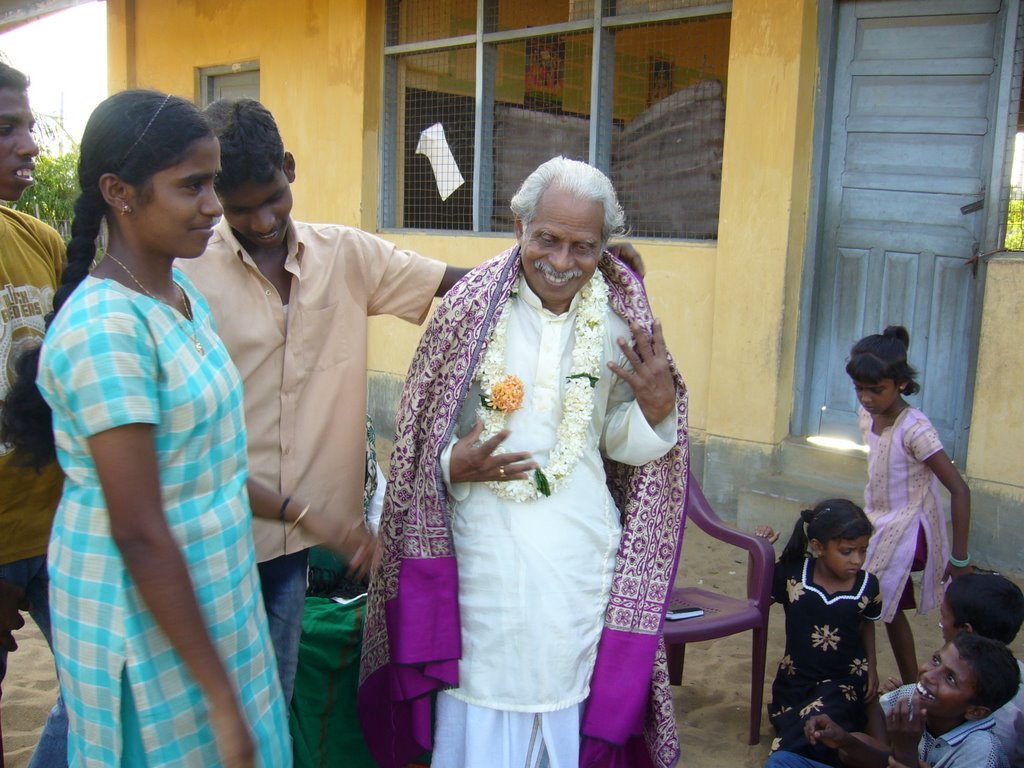
Children's Group of the Third Eye Local Knowledge and Skill Activists Group Honoring Master Storyteller Master Sivalingam
Tuesday, May 23, 2006
Signs of thumps up
Signs of thumps up
Signs of thumps up
Of the state economists,
Symbolize the strength
Of state economy
In media
Men and women of the state
Struggles to meet the both ends
The real situation
Is scientifically different,
Statistics, read accurately
And interprets appropriately
Graphs in the authentic reports
Always moving upwards
To the satisfaction
Of the people in power
In order to gain
The hearts and minds
Of the people of their state
Academics are busy
With quoting latest data
For their current commitments
Still men and women of the state
Struggles to meet the both ends
S.Jeyasankar
12.01.2006
Signs of thumps up
Of the state economists,
Symbolize the strength
Of state economy
In media
Men and women of the state
Struggles to meet the both ends
The real situation
Is scientifically different,
Statistics, read accurately
And interprets appropriately
Graphs in the authentic reports
Always moving upwards
To the satisfaction
Of the people in power
In order to gain
The hearts and minds
Of the people of their state
Academics are busy
With quoting latest data
For their current commitments
Still men and women of the state
Struggles to meet the both ends
S.Jeyasankar
12.01.2006
It’s a Different Country
Three hearty cheers for Tea pluckers
Heep Heep Hurrey!!!
Three hearty cheers for Garment workers
Heep Heep Hurrey!!!
Three hearty cheers for House maids
Heep Heep Hurrey!!!
The economic burden of the country
Is on the shoulders of women
Women are the back born of this nation
But men are really worried about
The double burden
Of working women
And shoulder the burden
Of the politics on them
And manage the country
To get rid of from
All the impediments
By militarizing
By privatizing
By liberalizing
By globalizing
And even celebrates
The Women’s Day on March Eight
To make the working women happy
As in May First of every year
To make the working class happy
Naturally
Men are good politicians
And some are with
Extra ordinary capacities
Capable of leadership
To raise the flags
On the “Annual Independence Day”
Hail the politics
Of the Manhood
In the “Pearl of the Indian Ocean”
S.Jeyasankar
12.01.2006
Three hearty cheers for Tea pluckers
Heep Heep Hurrey!!!
Three hearty cheers for Garment workers
Heep Heep Hurrey!!!
Three hearty cheers for House maids
Heep Heep Hurrey!!!
The economic burden of the country
Is on the shoulders of women
Women are the back born of this nation
But men are really worried about
The double burden
Of working women
And shoulder the burden
Of the politics on them
And manage the country
To get rid of from
All the impediments
By militarizing
By privatizing
By liberalizing
By globalizing
And even celebrates
The Women’s Day on March Eight
To make the working women happy
As in May First of every year
To make the working class happy
Naturally
Men are good politicians
And some are with
Extra ordinary capacities
Capable of leadership
To raise the flags
On the “Annual Independence Day”
Hail the politics
Of the Manhood
In the “Pearl of the Indian Ocean”
S.Jeyasankar
12.01.2006
Wednesday, April 12, 2006
We Say NO!
Dear Friends,
We, The Third Eye Local Knowledge and Skill Activists group came to know that A letter titled “To Whom It May Concern”, dated Sunday, April 09.2006, and signed as Third Eye Observer(which is similar to our groups name) has been circulated in Batticloa, District.
The Third Eye Local Knowledge and Skill Activists group have no connection to the above.
Thanks
Coordinator
We, The Third Eye Local Knowledge and Skill Activists group came to know that A letter titled “To Whom It May Concern”, dated Sunday, April 09.2006, and signed as Third Eye Observer(which is similar to our groups name) has been circulated in Batticloa, District.
The Third Eye Local Knowledge and Skill Activists group have no connection to the above.
Thanks
Coordinator
Sunday, March 12, 2006
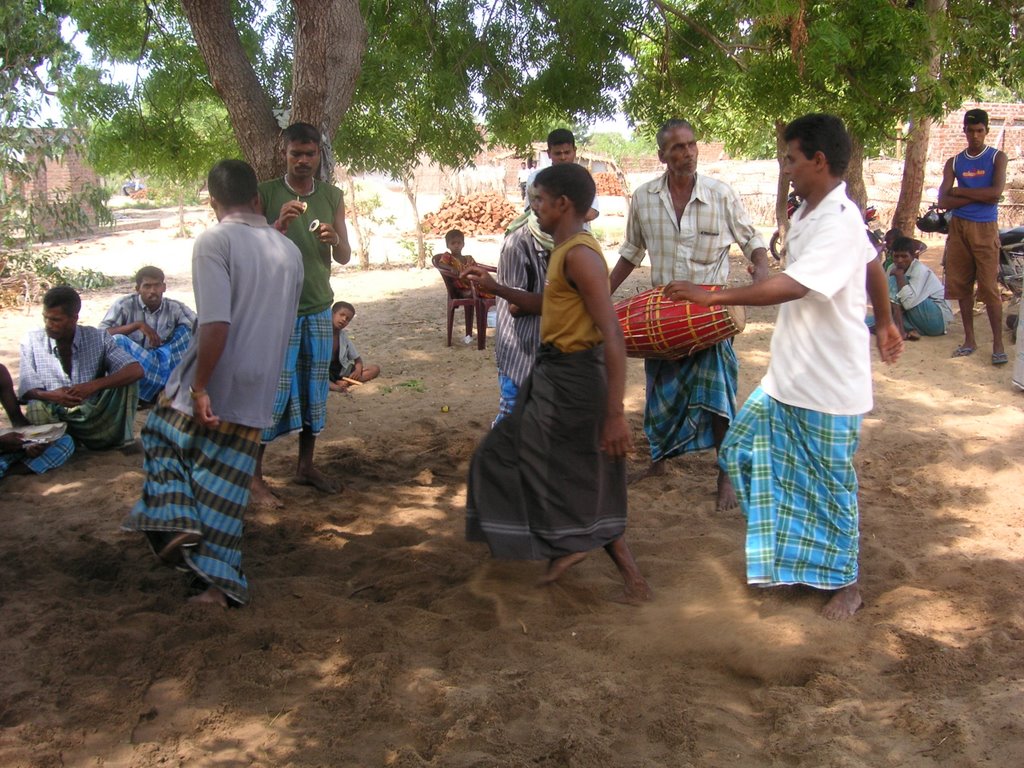
It’s not a riddle or History and Westory
“Let them send the satellites and we will produce nurses and develop tourism”
Voice of a Masters Neo Ambassador
I’m a teacher
Of a “Higher Institution”
And teaching subjects
Not to the “simpletons”
But to the “cream
Of our society”
The class was full
The subject was “Sri Lankan Studies”
And the medium of instruction
Wow!
In English
I am proud and very proud
To be a genuine intellectual
That I had mastered
My Masters language
And teach the subjects
In my Masters Language
The undergrads are fresh
And from all the streams
Were grouped in a mix
According to the mastery
Of the Masters’ Language
Seniors, super seniors
The staff, the “nonacademic”
And even the minor employees
Call them “freshers”
One day but not accidentally
I asked the undergrads
Even though I’m an “Intellectual”
I asked the undergrads
Not an intelligent
But a normal question
“Why is there not
A person of our country
Or from the “Third World Countries”
Or the blacks or brown or even yellows
Or women, except Madam Marie Curie,
Half the portion of the population
Was not in the columns
Of the inventors and inventions
Or the discoverers and discoveries
Of the science or social sciences books”
Undergrads are brave enough to respond
In the same Masters’ Language
And said, said without any hesitation
“We didn’t have facilities”
“They are the people for invention and discoveries”
“Let them invent and discover and we will use them”
“We are lazy people no?”
Oh its enough it’s enough
My brave bunch of “the cream of the society”
Like a committed scientist
I had experimented and asked
The same old question
From the undergrads in different classes
And came out with the very same
Brave old answers of slave celebrations
S.Jeyasankar
25.10.2005
*From "Waves waves and waves" a poetry collection in print.
Voice of a Masters Neo Ambassador
I’m a teacher
Of a “Higher Institution”
And teaching subjects
Not to the “simpletons”
But to the “cream
Of our society”
The class was full
The subject was “Sri Lankan Studies”
And the medium of instruction
Wow!
In English
I am proud and very proud
To be a genuine intellectual
That I had mastered
My Masters language
And teach the subjects
In my Masters Language
The undergrads are fresh
And from all the streams
Were grouped in a mix
According to the mastery
Of the Masters’ Language
Seniors, super seniors
The staff, the “nonacademic”
And even the minor employees
Call them “freshers”
One day but not accidentally
I asked the undergrads
Even though I’m an “Intellectual”
I asked the undergrads
Not an intelligent
But a normal question
“Why is there not
A person of our country
Or from the “Third World Countries”
Or the blacks or brown or even yellows
Or women, except Madam Marie Curie,
Half the portion of the population
Was not in the columns
Of the inventors and inventions
Or the discoverers and discoveries
Of the science or social sciences books”
Undergrads are brave enough to respond
In the same Masters’ Language
And said, said without any hesitation
“We didn’t have facilities”
“They are the people for invention and discoveries”
“Let them invent and discover and we will use them”
“We are lazy people no?”
Oh its enough it’s enough
My brave bunch of “the cream of the society”
Like a committed scientist
I had experimented and asked
The same old question
From the undergrads in different classes
And came out with the very same
Brave old answers of slave celebrations
S.Jeyasankar
25.10.2005
*From "Waves waves and waves" a poetry collection in print.
Wednesday, March 08, 2006
Summer Solstice, Batticaloa, Sri Lanka
The war had turned inward until it resembled
suicide. The only soothing thing was water.
I passed the sentries, followed the surf out of sight.
I would sink into the elements, become simple.
Surf sounds like erasure, over and over.
I lay down and let go, the way you trust an animal.
When I opened my eyes, all down the strand
small crabs, the bright yellow of a crayon,
had come out onto the sand. Their numbers, scattered,
resembled the galactic spill and volume of the stars.
I, who had lain down alone, emptied,
waked at the center of ten thousand prayers.
Who would refuse such attention. I let it sweeten me
back into the universe. I was alive, in the midst
of great loving, which is all I've ever wanted.
The soldiers of both sides probably wanted just this.
From Warscape With Lovers, © 1997 by Marilyn Krysl
suicide. The only soothing thing was water.
I passed the sentries, followed the surf out of sight.
I would sink into the elements, become simple.
Surf sounds like erasure, over and over.
I lay down and let go, the way you trust an animal.
When I opened my eyes, all down the strand
small crabs, the bright yellow of a crayon,
had come out onto the sand. Their numbers, scattered,
resembled the galactic spill and volume of the stars.
I, who had lain down alone, emptied,
waked at the center of ten thousand prayers.
Who would refuse such attention. I let it sweeten me
back into the universe. I was alive, in the midst
of great loving, which is all I've ever wanted.
The soldiers of both sides probably wanted just this.
From Warscape With Lovers, © 1997 by Marilyn Krysl
Tuesday, March 07, 2006
Beating Wife is NOT Manliness!
Affiliates of the THIRD EYE Local Knowledge and
Skill Activists Group will celebrate the March 08, 2006
Women’s Day by offering white flowers in the morning
to the men who are NOT “wife beaters” and wish them
for creating a peaceful and beautiful environment in
Home and on the Planet Earth.
Children and Youth affiliates of the THIRD EYE from
different villages will offer white flowers in
groups or as individuals and wish them as
“WE, the Third Eye Local Knowledge and Skill
Activists Group wish you for creating a peaceful and
beautiful environment in Home and on the Planet
Earth
by NOT to be a “wife beater.”
In the evening there will be gatherings with
cultural
programs on the issue of Domestic Violence.
Street Play titled "We say NO!" will be performed in Batticaloa and in Puthukkudiyiruppu.
THIRD EYE
Local Knowledge and Skill Activists Group.
07.03.2006
THIRD EYE is a self supported group of affiliates
committed to initiate and stregnthen the self
sustaining collective events at community level is
extended its commitment to “Men against violence
against Women” campaign from year
2004.
Skill Activists Group will celebrate the March 08, 2006
Women’s Day by offering white flowers in the morning
to the men who are NOT “wife beaters” and wish them
for creating a peaceful and beautiful environment in
Home and on the Planet Earth.
Children and Youth affiliates of the THIRD EYE from
different villages will offer white flowers in
groups or as individuals and wish them as
“WE, the Third Eye Local Knowledge and Skill
Activists Group wish you for creating a peaceful and
beautiful environment in Home and on the Planet
Earth
by NOT to be a “wife beater.”
In the evening there will be gatherings with
cultural
programs on the issue of Domestic Violence.
Street Play titled "We say NO!" will be performed in Batticaloa and in Puthukkudiyiruppu.
THIRD EYE
Local Knowledge and Skill Activists Group.
07.03.2006
THIRD EYE is a self supported group of affiliates
committed to initiate and stregnthen the self
sustaining collective events at community level is
extended its commitment to “Men against violence
against Women” campaign from year
2004.
Beating Wife is NOT Manliness!
Affiliates of the THIRD EYE Local Knowledge and
Skill Activists Group will celebrate the March 08, 2006
Women’s Day by offering white flowers in the morning
to the men who are NOT “wife beaters” and wish them
for creating a peaceful and beautiful environment in
Home and on the Planet Earth.
Children and Youth affiliates of the THIRD EYE from
different villages will offer white flowers in
groups or as individuals and wish them as
“WE, the Third Eye Local Knowledge and Skill
Activists Group wish you for creating a peaceful and
beautiful environment in Home and on the Planet
Earth
by NOT to be a “wife beater.”
In the evening there will be gatherings with
cultural
programs on the issue of Domestic Violence.
Street Play titled "We say NO!" will be performed in Batticaloa and in Puthukkudiyiruppu.
THIRD EYE
Local Knowledge and Skill Activists Group.
07.03.2006
THIRD EYE is a self supported group of affiliates
committed to initiate and stregnthen the self
sustaining collective events at community level is
extended its commitment to “Men against violence
against Women” campaign from year
2004.
Skill Activists Group will celebrate the March 08, 2006
Women’s Day by offering white flowers in the morning
to the men who are NOT “wife beaters” and wish them
for creating a peaceful and beautiful environment in
Home and on the Planet Earth.
Children and Youth affiliates of the THIRD EYE from
different villages will offer white flowers in
groups or as individuals and wish them as
“WE, the Third Eye Local Knowledge and Skill
Activists Group wish you for creating a peaceful and
beautiful environment in Home and on the Planet
Earth
by NOT to be a “wife beater.”
In the evening there will be gatherings with
cultural
programs on the issue of Domestic Violence.
Street Play titled "We say NO!" will be performed in Batticaloa and in Puthukkudiyiruppu.
THIRD EYE
Local Knowledge and Skill Activists Group.
07.03.2006
THIRD EYE is a self supported group of affiliates
committed to initiate and stregnthen the self
sustaining collective events at community level is
extended its commitment to “Men against violence
against Women” campaign from year
2004.
Wednesday, February 15, 2006
Poem of T. Kirupacaran
To Earthquake!
Hey! Earthquake!
You ten-lettered monster!
I hate you.
I hate you because
You empty the earth
Of
People, animals and
Peaceful dwellings,
And devour them up all
With your cracky mouth.
First you start
With a tremor,
Like a whisper In the ear
So mild to hear And then
You end with a roar
So hard to bear
And brings the earth
To the edge of despair.
If you strike again
Do so in some planets far away,
But never again
In this earth so lovely and gay.
Hey! Earthquake!
You ten-lettered monster!
I hate you.
I hate you because
You empty the earth
Of
People, animals and
Peaceful dwellings,
And devour them up all
With your cracky mouth.
First you start
With a tremor,
Like a whisper In the ear
So mild to hear And then
You end with a roar
So hard to bear
And brings the earth
To the edge of despair.
If you strike again
Do so in some planets far away,
But never again
In this earth so lovely and gay.
Thursday, February 02, 2006
Kooththu is a art of community, not merely performance source

Arts: Kooththu is art of a community, not merely performance Source:
The Northeastern Monthly - February 1, 2006
By: S. Jeysankar
The struggle against colonial aggression and the emergence of nationalism emphasises the urgent need for the formation of a national culture as opposed to colonialism or colonial culture.
Anti-colonial struggles were the prominent socio-political activity in many colonised countries around the time of the Second World War. Countries newly liberated from direct colonial rule waged a struggle on cultural platforms for a total liberation from colonialism. But economic dependency and the colonial orientation of the education system, the media and the social construction of colonial rule restricted the establishment of a society that was totally free from colonial moorings.
This leads to a strange phase in societies where there is a clash of different oppressive worldviews – the ‘traditional’ and the ‘western construct’ – in the formation of societies. That is the revival of tradition through the western eye or a western or modern worldview.
The theatrical works of Professor E. R. Sarachchandra, especially Maname and Sinhabhahu are considered as national theatre of Sri Lanka. Politically and culturally it means the national theatre of the Sinhalese in Sri Lanka. The work of Sarachchandra represents only Sinhala identity. To what extent it represents the differences within the Sinhala communities and cultures, is another question.
These artistic works and the political and cultural implications of such activity inspired the Tamils, especially Tamil intellectuals in Sri Lankan universities. Their response was the production of Ravanesan, Karnan Por, Vaaly Vathay and Nondy Nadaham in the 1960s, the process which they named as working for the creation of a national theatre for the Tamils of Sri Lanka.
Cultural activity coming from Sinhala and Tamil intellectuals, artists and intellectual-artists are clear examples of how they perceived the concept of a modern nation and its identity. We can observe the lack of perception in their activities. The perceptions are ethnic bounded and elite-oriented. The artistic and aesthetic theories they incorporated, the works they produced and the target audience of their works, help to establish this argument.
Professor S. Viththiananthan modified kooththu to fit the picture frame stage as Sarachchandra had done with Sinhala theatre. He shifted kooththu from an open space –vadda kalari (round stage) – to a controlled-space auditorium, constructed by the culture of the colonial power.
“Both the missionaries and the colonial administration used the school system to destroy the concept of the ‘empty space’ among the people by trying to capture and confine it in government-supervised urban community halls, school halls, church buildings and in actual theatre buildings with proscenium stage.” (Thiongo 1986: 37-38)
Viththiananthan’s university-based revival through modification of the kooththu program created a generation of modem theatre practitioners to associate themselves with kooththu for their own purposes. They used the elements of kooththu but worked mostly within the picture frame stage.
It is paradoxical that in a theatrical tradition which provides a variety of spaces – temple precincts, fields, streets and market squares – modern theatre, which arose during the mid-19th century in India, chose for itself the proscenium theatre. The first proscenium theatres in the region were built in Bombay and Calcutta in the 1860s, nearly 300 years after England’s first proscenium theatre (1576).
It took three centuries and colonialism for the proscenium to find a place in India. But when it came, it totally changed the traditional concept and character of theatrical space, from the point of view of both actor and spectator. It brought about separation between the two, critically affecting their traditional intimate relationship.
It also forced spectators to view performances frontally from a fixed seat and a fixed angle. Traditionally, audiences have watched performances from different angles, having a constantly changing perception of the performance. They fully realize the importance of space in shaping a performance, and the role the spectators play in such neutral and informal spaces.
But the lack of understanding the importance of space in the socio-political context made the producers of kooththu to choose such art forms only for modification or revival programs. The influence of the colonially imposed modern thinking played an important role in this selection.
Modem thinking and modem theories played a major role in the process of forming a modern nation and a national culture for its identification. ‘Modern,’ ‘modernity’ and ‘modernisation’ are the words and concepts, which built the thought processes of the ‘educated’ elite.
Traditional theatre is considered as an element in the formation of a national culture and it is so in the revival and modification of kooththu. Those in search of elements for the formation of a national culture identified kooththu as one, but did not take into consideration the connection between the people and the art form, which they seek for the formation of national culture.
Why did they consider kooththu as a strong element in building a national theatre, in the formation of national culture and the national identity? And why did they forget the people who perform it?
The approach of university-educated intellectuals alienates the art form from the people who have been performing it for generations. This is the result of modernist thinking of colonially designed intellectuals. Artistic norms, the values of aesthetics, and most importantly, the selection of the segment of society, which is the middle class spectator, leads to this shift in cultural formation.
Maybe the slogan of the program was called Return to the roots, but it was generally a program for disconnecting from the roots. Maname and Sinhabhahu are now the possessions of Sarachchandra’s family or his troupe; nobody is concerned about the community who performed it for generations or the traditional performance which was the source of the new creations.
Even in modern academic and in artistic practices, culture means the culture of the ruling class that is ‘high culture,’ while others are considered ‘folk art’ meaning ‘low culture.’ They take peoples’ art, but not the people, and make it the art of high culture. This is the politics of national culture in the modem political context.
A question raised by a colleague on this matter one day clearly reveals the dangers of one-sided intellectual exercises and insists on the importance of detailed argument and the necessity of the reformulation programs on kooththu with the participation of the kooththu community.
She asked me, “Why are you, an outsider with limited experience in kooththu, working on kooththu in the villages, when well experienced people who are insiders to the art form alienate themselves from the art in the villages and are working on it from within middle class-centred spaces with modern concepts?”
I replied to her “This is the essence of my work.” Kooththu is an art of a community and not only a performance; it is a process of the people. I am concentrating on this aspect to formulate an organic form of community theatre based on kooththu. Basically, creating our own spaces by ourselves for the betterment of the society is the essence of my work.
Quotations from the works of Ngugi Wa Thiongo and Peixoto Fernando capture the essence of the relationship between national culture and cultures of people in other parts of the world.
“It was imperialism that had stopped the free development of the national traditions of theatre rooted in the ritual and ceremonial practices of the peasantry. The real language of African theatre could only be found among the people – the peasantry in particular – in their life, history and struggles.
“Kamiriithu then was not an aberration but an attempt at reconnection with the broken roots of African civilization and its traditions of theatre. In its very location in a village within the kind of social classes described above, Kamiriithu was the answer to the question of the real substance of a national theatre. Theatre is not buildings. People make theatre. Their life is the very stuff of drama. Indeed Kamiriithu reconnected itself to the national tradition of the empty space, of language, of content and of form.” (Thiongo 1986: 41-42)
“National characteristics are not abstract in theatre because a theatre is in dialog with the social changes it continuously modifies. To keep theatre forms from the past may be useful as a way of preserving a cultural heritage, but a theatre that limits itself to preservation misses participating in the dynamic transformation of society.” (Fernando 1989: 60)
Works cited:Thiongo, Ngugi Wa. (1986), Decolonizing the Mind: the Language of African Theatre, James Currey, London Fernando, Peixoto. (1989), ‘Brazilian theatre and national identity,’ in Theatre and Drama Review, Vol.120, No.2
Sunday, January 29, 2006
The Monster’s Nuclear Arms
Or the unlearned Big Men
Prologue
Got the boon to raze the world
I’m the king of kings unrivalled
Is there anyone to challenge me?
(No, no, no… Never)
I’m the leader blessed ever to be.
(Yes, yes, yes……)*
The celebrated
Monster’s nuclear arms
Are motionless
Not only the hands
Of natural disasters
But also in the hands
Of branded terrorists
And it is even dangerous
In the time of disasters
If it is natural or man made
It is dangerous
To its own worshipers
And to the innocent civilians
To whom the monsters
Are glorified as Protectors
The hands that rose to show
The power of military might
Over the heads of the roaring
Innocent jubilant civilians
Stretch forward feebly
To the communities of the world
To get them to rise
From the rumbles
Of the nature’s shake
The big men did not learn
From the men made disasters
Even after the to big wars
And after the two big bombs
And after the chain of
Lilliputians’ wars
The world over
The monster’s nuclear arms
Are not the protection shields
As mentioned by the Big Men
Not the symbol of dignity
As mentioned by the Big Men
And certainly not the element of peace
As mentioned by the Big Men
Epilogue
March forward will we
March forward will we
Getting rid of nuclear arms
March forward will we
Devoid of power hunger
March forward will we
For all lives to live in peace
March forward will we
For the whole world to world to flourish
March forward to will we.*
The prologue and Epilogue are song from a Thamil play “Ashen Touch” which deals with nuclear issues. The songs are in Thamil by M. nilanthan and S. Jeyasankar respectively. It’s a translation of Mr. T. Kirupacaran.
10.10.2005
Or the unlearned Big Men
Prologue
Got the boon to raze the world
I’m the king of kings unrivalled
Is there anyone to challenge me?
(No, no, no… Never)
I’m the leader blessed ever to be.
(Yes, yes, yes……)*
The celebrated
Monster’s nuclear arms
Are motionless
Not only the hands
Of natural disasters
But also in the hands
Of branded terrorists
And it is even dangerous
In the time of disasters
If it is natural or man made
It is dangerous
To its own worshipers
And to the innocent civilians
To whom the monsters
Are glorified as Protectors
The hands that rose to show
The power of military might
Over the heads of the roaring
Innocent jubilant civilians
Stretch forward feebly
To the communities of the world
To get them to rise
From the rumbles
Of the nature’s shake
The big men did not learn
From the men made disasters
Even after the to big wars
And after the two big bombs
And after the chain of
Lilliputians’ wars
The world over
The monster’s nuclear arms
Are not the protection shields
As mentioned by the Big Men
Not the symbol of dignity
As mentioned by the Big Men
And certainly not the element of peace
As mentioned by the Big Men
Epilogue
March forward will we
March forward will we
Getting rid of nuclear arms
March forward will we
Devoid of power hunger
March forward will we
For all lives to live in peace
March forward will we
For the whole world to world to flourish
March forward to will we.*
The prologue and Epilogue are song from a Thamil play “Ashen Touch” which deals with nuclear issues. The songs are in Thamil by M. nilanthan and S. Jeyasankar respectively. It’s a translation of Mr. T. Kirupacaran.
10.10.2005
Subscribe to:
Posts (Atom)